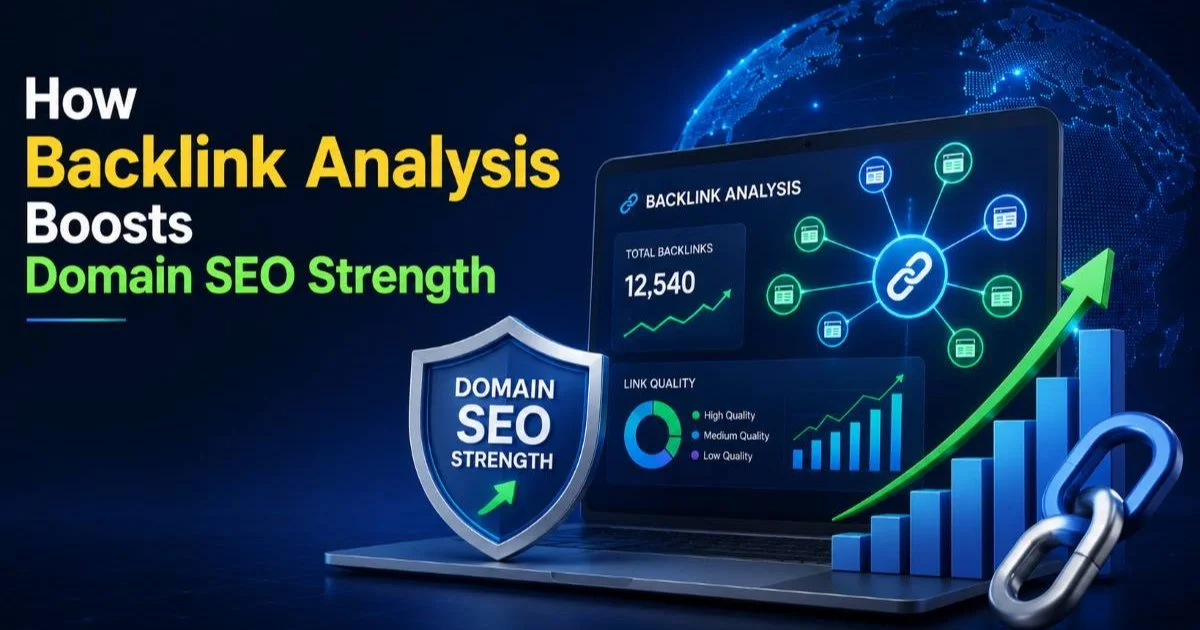
How backlink analysis boosts domain SEO strength is a question every serious digital marketer should be asking right now. Your backlink profile is one of the most powerful signals search engines use to determine where your pages rank. Without understanding who links to you, how those links carry authority, and where the gaps exist, you're essentially flying blind. An SEO audit that skips backlink analysis is incomplete at best and misleading at worst.
The sites that dominate search results almost always have intentional, well-maintained link profiles built through consistent effort. In this guide, you'll learn the exact steps to analyze your backlinks and translate that analysis into measurable ranking improvements. For a foundational understanding of what makes a domain strong in search, read more about how domain SEO strength works and why it matters.
Key Takeaways
- Backlink quality matters far more than raw link count for domain authority.
- Toxic links can actively suppress your rankings if left unchecked.
- Competitor backlink gaps reveal your best opportunities for new links.
- Regular analysis prevents algorithmic penalties before they happen.
- Anchor text diversity signals natural link building to search engines.
Step 1: Audit Your Existing Backlink Profile
Identify Link Sources and Quality
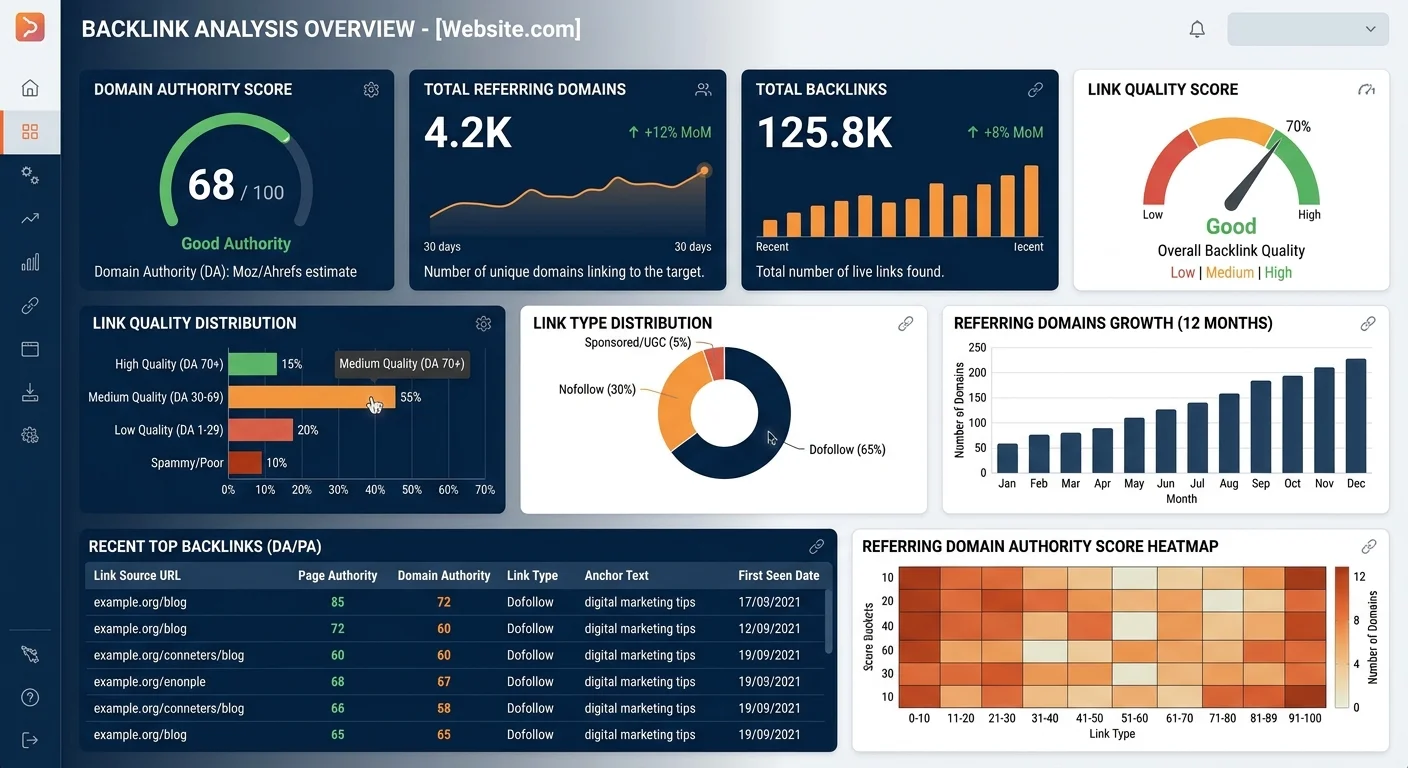
Start by pulling a complete list of every domain linking to your site. Tools like Ahrefs, Moz, or Semrush can generate this data in minutes. Pay attention to each referring domain's authority score, relevance to your niche, and whether the link is dofollow or nofollow. A single link from a reputable industry publication carries more weight than dozens of links from random directories or low-quality blog networks.
Categorize your links into tiers. Tier one includes links from domains with high authority scores (above 50 in most tools) and strong topical relevance. Tier two covers moderate-authority sites that still have legitimate traffic. Tier three is everything else, including forum signatures, comment spam, and link farms. This tiered approach helps you see the real composition of your profile at a glance.
Look beyond the numbers and examine context. A link embedded naturally within editorial content on a relevant page signals genuine endorsement. A link buried in a footer or sidebar across hundreds of pages looks manipulative to Google's algorithms. Understanding this distinction is what separates a productive audit from a superficial one. Your goal is to know exactly what your profile looks like before making any changes.
Flag Toxic and Spammy Links
Toxic backlinks are links from penalized, hacked, or purely spam-driven websites. These can drag your rankings down significantly if they accumulate. Most backlink analysis tools assign a toxicity score to each referring domain. When you find links scoring in the danger zone, compile them into a disavow file and submit it through Google Search Console. Don't rush this step; disavowing legitimate links by mistake can hurt you more than the toxic ones.
Never disavow links in bulk without manually reviewing each domain first. Automated tools sometimes flag legitimate sites incorrectly.
Step 2: Analyze Competitor Backlink Strategies
Find the Gap Between You and Top Rankers
Once your own audit is complete, turn your attention to the sites outranking you for your target keyword phrases. Run a backlink gap analysis by comparing your referring domains against those of your top three to five competitors. Most professional SEO tools offer a dedicated "link intersect" or gap feature. The output shows you exactly which sites link to your competitors but not to you, revealing a roadmap of untapped opportunities.
Study the types of content earning links for competitors. Are they getting links from resource pages, guest posts, data-driven studies, or digital PR campaigns? Knowing the format gives you a template for your own outreach. If a competitor earned 30 links from a single industry survey, that tells you original research is a high-yield strategy in your niche. Reverse-engineering what works saves months of guesswork.
Don't just look at volume. A competitor might have fewer total backlinks but dramatically higher average domain authority across their referring sites. This quality advantage often explains why they rank above you despite appearing to have a smaller profile. Understanding this nuance is how backlink analysis boosts domain SEO strength in practice, not theory. Focus on replicable, high-quality link sources rather than chasing raw numbers.
Cross-reference the competitor's most-linked pages with your own content library. If they have a comprehensive guide on a topic and you only have a thin blog post, that content gap is why they earned links you didn't. Upgrading your content to match or exceed their depth is often the prerequisite before any outreach will succeed. Editors link to the best available resource, so become that resource.
Create a spreadsheet mapping each competitor's top linked pages against your own content. Color-code gaps as red, partial matches as yellow, and strong matches as green.
Step 3: How Backlink Analysis Boosts Domain SEO Strength Through Link Building
Prioritize High-Authority Link Targets
Armed with your gap analysis, build a prioritized outreach list sorted by domain authority and topical relevance. Start with sites that already link to multiple competitors, since they've demonstrated a willingness to link within your space. Personalized outreach emails that reference specific content on the target site convert at roughly 5 to 10 percent, compared to under 1 percent for generic template emails. Quality outreach takes time but delivers links that actually move the needle.
Consider the link placement you're requesting. An in-content editorial link from a high-traffic page is worth pursuing aggressively. A sidebar mention or author bio link is acceptable but carries less weight. Knowing what to ask for, and being realistic about what each site is likely to offer, makes your outreach more effective. Proposing specific value to the linking site, like updated data or a complementary resource, increases your acceptance rate significantly.
For scaling your research and identifying opportunities faster, AI-powered SEO tools can automate parts of the prospecting process. These tools can scan for broken links on target sites, identify unlinked brand mentions, and surface content gaps you might miss manually. The combination of human judgment and machine efficiency produces the best link-building results.
Optimize Your Anchor Text Distribution
Anchor text distribution is one of the most overlooked aspects of backlink strategy. If 80 percent of your incoming links use the exact same keyword-rich anchor, that pattern looks unnatural and can trigger a penalty. A healthy profile includes a mix of branded anchors (your company name), naked URLs, generic phrases ("click here," "this resource"), and a smaller percentage of exact-match keyword anchors. Audit your current distribution and adjust your outreach strategy accordingly.
| Anchor Type | Ideal Percentage | Example | Risk Level if Overused |
|---|---|---|---|
| Branded | 30-40% | "Domain Ranking" | Low |
| Naked URL | 20-25% | "domainranking.dev" | Low |
| Generic | 15-20% | "read more here" | Low |
| Partial Match | 10-15% | "domain SEO analysis tool" | Medium |
| Exact Match | 5-10% | "backlink analysis" | High |
These percentages are guidelines based on industry research, not hard rules. Every niche has slightly different natural patterns.
Step 4: Monitor and Maintain Your Backlink Health
Set Up Automated Link Monitoring
Backlink analysis isn't a one-time project. It's an ongoing discipline. Set up weekly or biweekly alerts for new and lost backlinks using your preferred SEO tool. When you lose a high-value link, you want to know immediately so you can investigate and potentially recover it. Common causes include page redesigns, CMS migrations, or editorial decisions to remove external links. A quick, polite email to the webmaster often resolves the issue.
"The sites that consistently rank highest treat backlink monitoring as a recurring process, not a one-time audit."
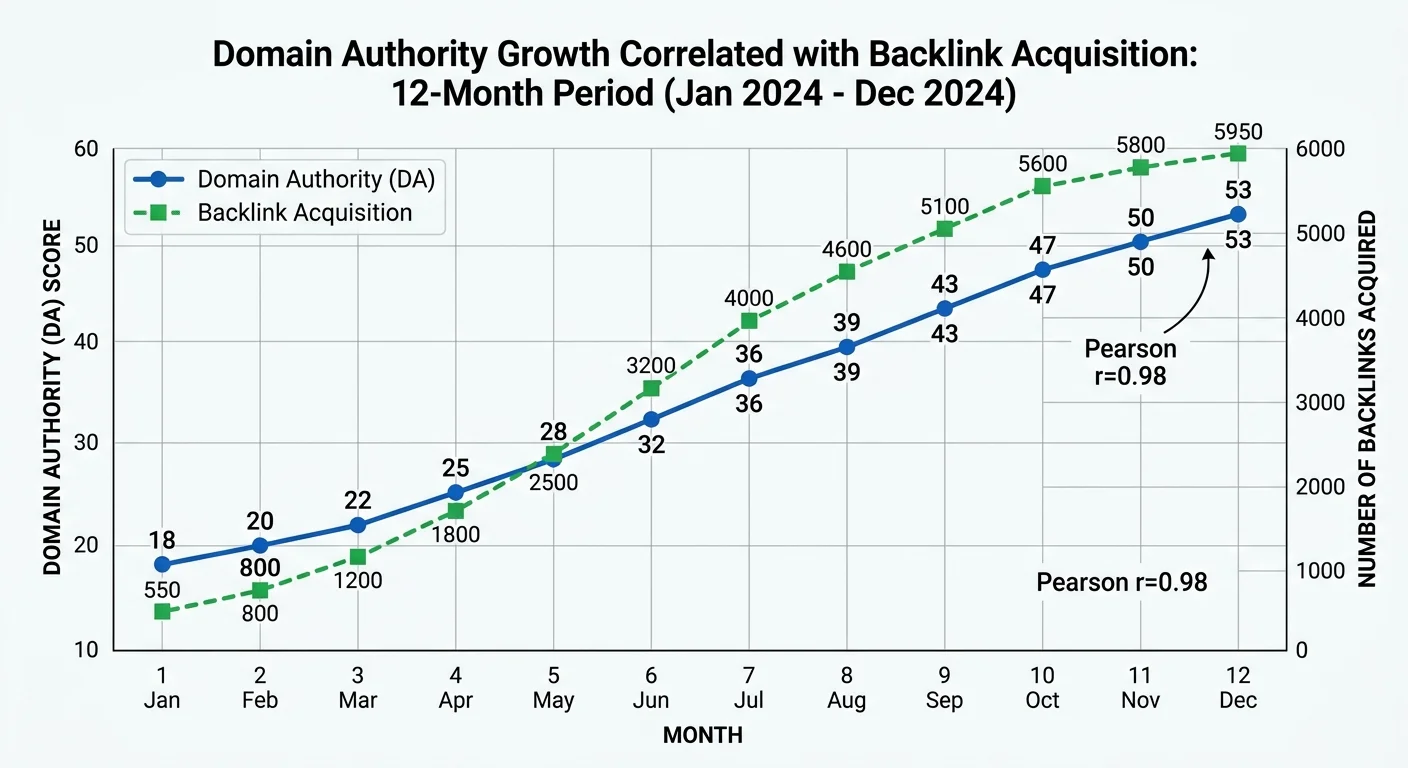
Track your domain authority and ranking positions alongside backlink changes over time. When you acquire a strong new link, you should see corresponding movement in keyword rankings within two to eight weeks. If you're building links and seeing no movement, that's a signal to reassess link quality, page-level optimization, or content relevance. The correlation between link acquisition and ranking improvement is your feedback loop for refining strategy.
}]Build a quarterly review cadence where you reassess your full backlink profile. Look for newly toxic domains that might have linked to you, check whether previously strong referring domains have declined in authority, and verify that your anchor text ratios remain healthy. This ongoing maintenance is how backlink analysis boosts domain SEO strength over the long term. Neglecting it means your profile degrades gradually, often without you noticing until rankings drop.
Document your process in a standard operating procedure. Include which tools you use, what thresholds trigger a disavow review, how you prioritize outreach targets, and how you track results. When your team grows or responsibilities shift, this documentation prevents knowledge loss. The best SEO teams operate with repeatable systems, not heroic individual efforts that can't scale. Your backlink maintenance process should be as systematic as your content calendar.
Create a shared dashboard that combines backlink metrics, keyword ranking data, and organic traffic trends so your team can spot correlations quickly.
Frequently Asked Questions
?How do I build a disavow file after flagging toxic backlinks?
?Is Ahrefs better than Semrush for backlink toxicity scoring?
?How long does a full backlink audit take for a mid-size site?
?Can a mostly nofollow backlink profile still hurt your domain authority?
Final Thoughts
Understanding how backlink analysis boosts domain SEO strength gives you a competitive edge that compounds over time. Every link you earn, every toxic link you disavow, and every competitor gap you close moves you closer to page one.
The process requires patience, good tools, and consistent execution. Treat your backlink profile as a living asset that needs regular attention, not a box to check once a year. The marketers who win in organic search are the ones who commit to this work month after month.
Disclaimer: Portions of this content may have been generated using AI tools to enhance clarity and brevity. While reviewed by a human, independent verification is encouraged.