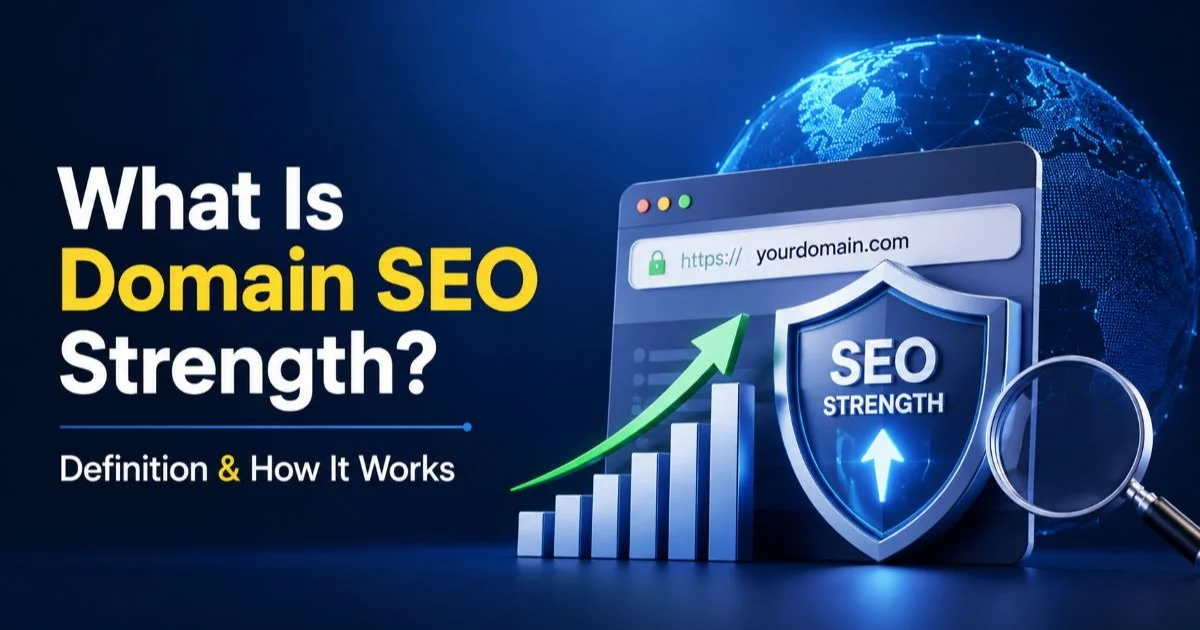
Domain SEO strength is the composite measure of how well a domain can compete in organic search, evaluated across factors like backlink profile, keyword visibility, content quality, domain age, and technical health. For digital marketers and SEO professionals, understanding this metric is not optional. It is the foundation of every competitive analysis, every content strategy, and every link-building campaign you run.
Without a clear picture of where a domain stands, you are making decisions in the dark. The stakes are real: companies that accurately assess their domain SEO strength consistently outperform those that rely on guesswork. Whether you are auditing a client's site or evaluating a domain acquisition, this concept sits at the center of modern SEO practice.
Knowing what it means, how it works, and how to improve it can separate a stagnant website from one that steadily climbs search rankings.
Key Takeaways
- Domain SEO strength reflects multiple ranking factors working together, not a single metric.
- Backlink quality matters significantly more than raw backlink quantity for authority building.
- Domain age signals trust, but only when paired with consistent content and link growth.
- Keyword ranking potential depends on topical relevance and existing domain authority combined.
- Regular auditing reveals hidden improvement opportunities that competitors often overlook entirely.

How Domain SEO Strength Works
Domain SEO strength is not a single number generated by Google. It is an abstracted concept that SEO tools approximate by combining several weighted signals. Tools like Ahrefs, Moz, and Semrush each calculate their own version of a site authority score, but the underlying ingredients are largely the same: link equity, organic keyword footprint, traffic patterns, and technical site health. No two tools will give you the exact same number, and that is fine. What matters is understanding what goes into the calculation.
The Role of Backlinks and Authority
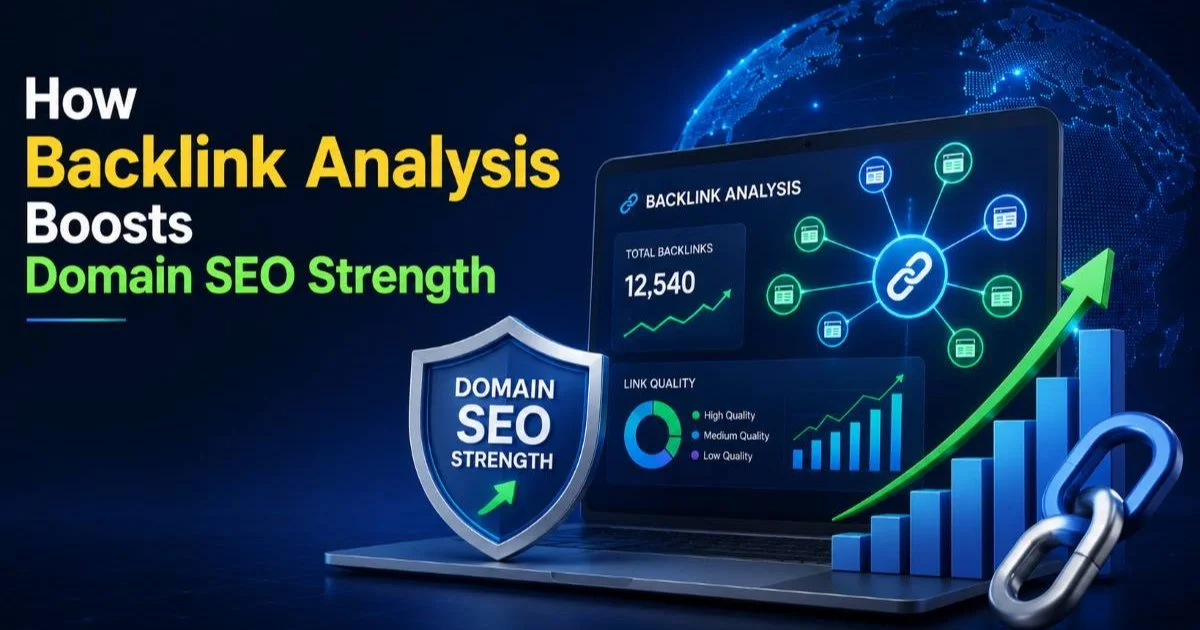
Backlink analysis forms the backbone of any domain strength assessment. Google's original PageRank algorithm was built on the premise that links from other sites function as votes of confidence. A domain with 500 high-quality links from authoritative news sites and industry publications will generally outrank a domain with 50,000 links from blog comment spam. Quality, relevance, and diversity of the referring domain portfolio all feed into what tools report as domain authority.
The anchor text distribution of your backlink profile also sends strong signals. If most of your inbound links use your brand name naturally, that looks organic. If they are stuffed with exact-match commercial keywords, search engines may flag the profile as manipulated. A healthy backlink profile blends branded, topical, and natural anchors in proportions that reflect genuine editorial linking behavior.
Keyword Signals and Content Relevance
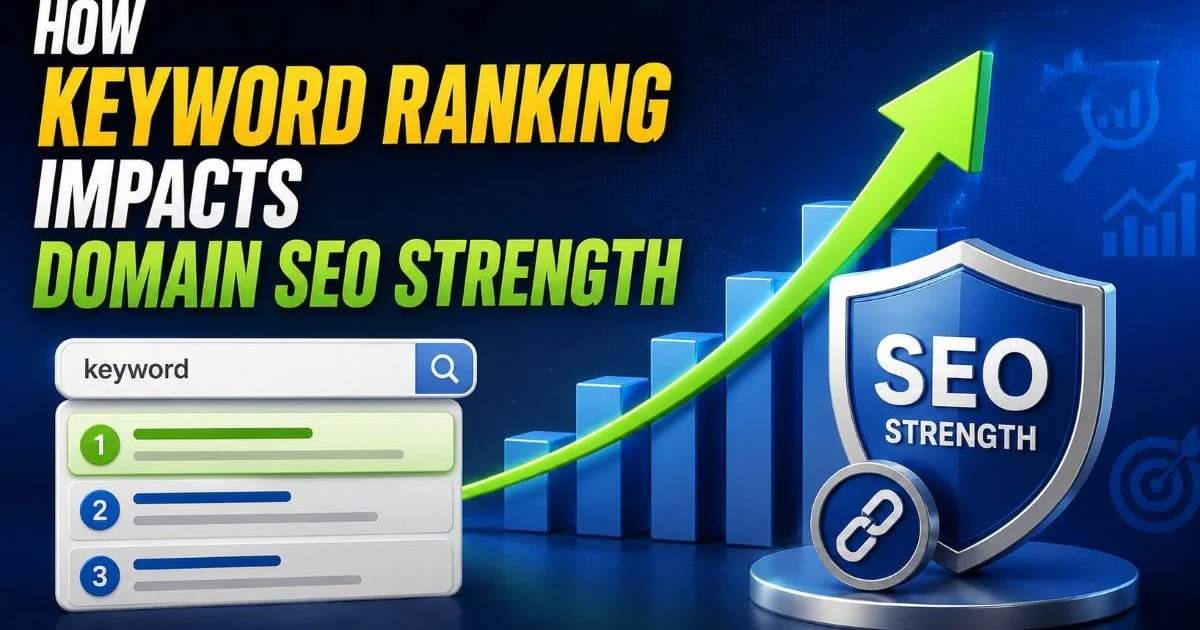
Beyond links, keyword ranking potential reflects how many search terms a domain already ranks for and how much room exists for growth. A site ranking for 10,000 keywords in the top 100 has demonstrated topical breadth that Google recognizes. The search engine's understanding of entity relationships means that a domain consistently publishing content within a defined niche builds compounding authority in that subject area. This is why a medical journal site can rank for a new health article far faster than a generic blog.
Focus on building topical clusters around your primary keywords to accelerate ranking potential for new pages.
Why Domain SEO Strength Matters
Understanding domain SEO strength is the difference between realistic goal-setting and wasted budgets. If you are a digital marketer launching a campaign for a new client, the first question should be: where does this domain actually stand? A domain with a site authority score of 15 competing against incumbents scoring 70 and above needs a fundamentally different strategy than one competing in a less saturated vertical. Knowing your starting position determines everything from keyword targeting to timeline expectations.
Competitive Analysis and Strategy
When you evaluate a competitor's domain, you are reverse-engineering their SEO playbook. By studying their backlink sources, you find link-building opportunities. By analyzing their keyword gaps, you discover content topics they have missed. A thorough competitive audit often reveals that the top-ranking site in your niche is not unbeatable; it simply has a more consistent history of doing the basics well. This insight alone can reshape an entire marketing strategy for a client.
The practical applications extend to domain acquisitions, partnership evaluations, and even link placement decisions. If a site offers you a guest posting opportunity, checking their domain SEO strength tells you whether that link will move the needle. An in-depth look at domain rating shows that while the number itself is not a Google ranking factor, it strongly correlates with a domain's ability to pass link equity and rank competitively.
Common Misconceptions
The "Age Equals Authority" Myth
One of the most persistent myths in SEO is that an older domain automatically has more authority. While domain age signals do carry some weight (Google has confirmed that very new domains may face a "sandbox" period), age alone guarantees nothing. A domain registered in 2005 that sat parked for 15 years before someone added content has almost no advantage over a freshly registered domain. What matters is the history of activity: when was quality content first published, when did backlinks start accumulating, and how consistently has the site been maintained?
Consider the role of the top-level domain itself. While .com remains the most trusted TLD globally, newer TLDs like .dev or .io have carved out strong niches in technology sectors. The TLD contributes to user trust and click-through rates, but it is not a direct ranking factor. A .xyz domain with excellent content and strong backlinks will outrank a neglected .com every time.
Domain age is measured from the first time Google indexed the domain, not from the registration date in WHOIS records.
Chasing a Single Score
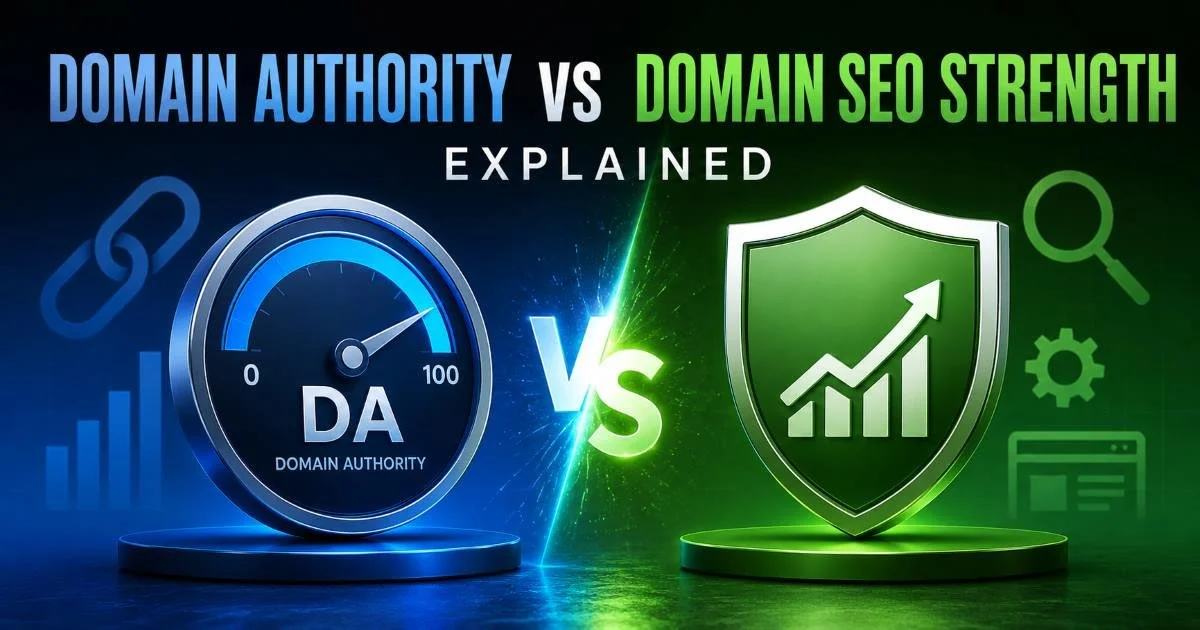
Another common mistake is obsessing over a single authority number. Moz's Domain Authority, Ahrefs' Domain Rating, and Semrush's Authority Score all use different methodologies. Comparing a DA of 40 to a DR of 40 is meaningless because the scales are not interchangeable. Instead, use these scores as relative benchmarks within the same tool. If your competitor has a DR of 55 and you have a DR of 30, you know the gap you need to close within that specific measurement framework.
| Metric | Provider | Scale | Primary Signal | Update Frequency |
|---|---|---|---|---|
| Domain Authority (DA) | Moz | 1 to 100 | Link equity and spam score | Monthly |
| Domain Rating (DR) | Ahrefs | 0 to 100 | Backlink profile strength | Daily index updates |
| Authority Score | Semrush | 0 to 100 | Traffic, links, and content | Continuously |
| Trust Flow | Majestic | 0 to 100 | Quality of linking domains | Daily crawl-based |
| Page Authority | Moz | 1 to 100 | Page-level link equity | Monthly |
Never purchase domains based solely on a high authority score. Scores can be artificially inflated through PBN links that carry penalties.
How to Improve Domain SEO Strength
Technical and On-Page Foundations
Improvement starts with the basics. A site that loads slowly, has broken internal links, or lacks proper schema markup is leaving authority on the table. Google's Core Web Vitals have made site speed and user experience direct ranking signals. Run a technical audit to identify crawl errors, duplicate content, orphan pages, and missing meta data. These fixes are often low-effort but high-impact, especially for sites that have never undergone a comprehensive technical review.
On-page optimization should target content depth, internal linking structure, and semantic relevance. Each page needs a clear primary keyword, supporting secondary terms, and enough substantive content to genuinely answer the searcher's query. Thin pages with 200 words of generic text do not build authority. Consolidating weak pages into comprehensive, well-structured resources can dramatically improve how search engines evaluate your domain's topical coverage.
Building Authority Through Links
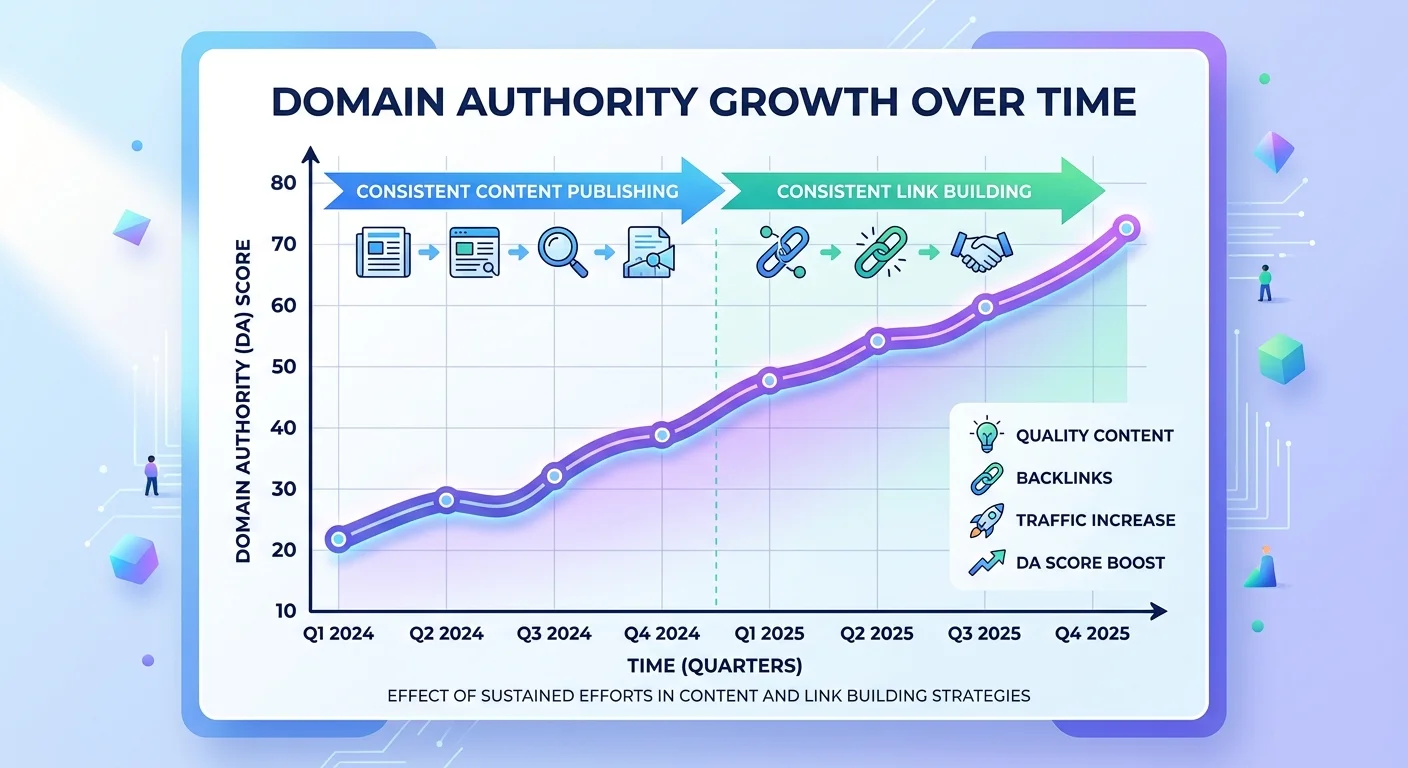
Link building remains the most direct way to increase domain SEO strength, but the approach must be strategic. Prioritize earning links from domains that are topically relevant to your niche. A single link from an industry publication with a domain authority of 70 will typically deliver more value than fifty links from unrelated directories. Digital PR, original research, and data-driven content are among the most effective methods for attracting high-quality editorial links naturally.
"The best link-building strategy is creating content that people genuinely want to reference and share."
Track your progress monthly. Monitor new referring domains, lost backlinks, anchor text changes, and keyword position movements. Tools on platforms like Domain Ranking allow you to analyze these signals in one place, giving you a unified view of how your domain's strength evolves over time. Consistent monitoring catches issues before they compound, whether that is a sudden drop in referring domains or a negative SEO attack introducing spammy links to your profile.
Set up automated alerts for significant backlink changes so you can respond to lost links or toxic link spikes within days.
Frequently Asked Questions
?How do I audit my backlink anchor text distribution for red flags?
?Does Ahrefs Domain Rating mean the same thing as Moz Domain Authority?
?How long does it realistically take to improve domain SEO strength?
?Is chasing a high domain authority score actually a useful SEO goal?
Final Thoughts
Domain SEO strength is a multidimensional concept that resists oversimplification. It reflects the accumulated effect of backlinks, content quality, technical health, keyword footprint, and domain history working in concert. No single metric tells the whole story, which is exactly why experienced SEO professionals triangulate across multiple tools and data points.
The path to improvement is not mysterious: build great content, earn quality links, fix technical issues, and do it consistently. Those who treat domain strength as an ongoing practice rather than a one-time project will see compounding results that are difficult for competitors to replicate.
Disclaimer: Portions of this content may have been generated using AI tools to enhance clarity and brevity. While reviewed by a human, independent verification is encouraged.